Book-Bat

Book-Bat

Exploring the world of fantasy from a Christian perspective!

  • Home
  • About Us
  • books
    • all books
    • Nonfiction
    • Davy Jones' Aquarium
  • Podcast
  • Blog
  • More
    • Library and Search
    • Events
    • Christian Perspective
    • Connect

Lessons from Star Wars: Picking Your Fantasy Battles Wisely

May 04, 2026 by Karlissa Koop in Thoughts on Fantasy

By Jason Koop

(You can listen to the podcast version of this post: Episode 56)


Those who have been following this blog for awhile may remember that my favourite Star Wars stories have come from the TV shows.  Specifically the animated ones that Dave Filoni has worked on.  They include The Clone Wars, Rebels, The Bad Batch and the recently released Maul: Shadow Lord.

One recurring theme from these shows is: do the ends justify the means?

Yoda references this in an episode (which I will talk about later in this post) where he says: “How Jedi choose to win, the question is.”  And from that reflection I have learned lessons that I, hopefully, will apply to our podcast and blog.  I’m going to go over three different Star Wars animated episodes, how they ask this question, and the lessons I have learned from them.
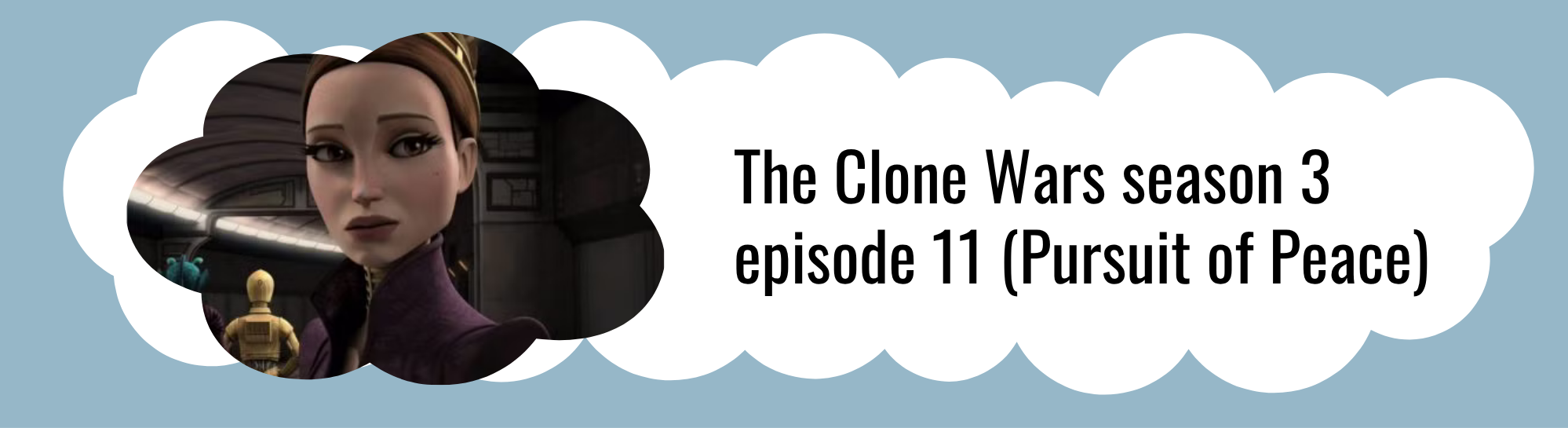
Political episode, with nary a lightsaber in sight.  The Republic is firmly mired in a seemingly never-ending war with the Separatists, and the cost of the war is becoming more and more of a sticking point.  In fact, the Republic is already being pushed to the brink of economic ruin with how much of its resources it is pouring into the war effort.

And yet, many in the Galactic Senate are willing to pass a bill that will in essence throw exorbitant amounts of money at the problem and create more clone troopers.  While some, like Senators Padme Amidala and Bail Organa, are opposed to this approach, their protests are largely falling on deaf ears, as most in the Senate are focused simply on defeating the Separatists.

Discouraged, and wondering if fighting this bill is worth the struggle, Padme is encouraged and convicted by one or her aides, who reminds her that listening to her people and caring for them is why she was put into power.  And so, she sits down, takes a moment and truly talks with her aide, asking her how her family is doing.  How the war is affecting them.  And in that conversation, the truth comes out.

While the Senate debates and votes on how much it can justify spending in an attempt to defeat the Separatist army, it is the lower, middle and working class that is paying the cost of the war.  Power outages, lack of running water, schools being shut down, food becoming a scarcer commodity.  Padme convinces the Senate that if they continue to recklessly pursue greater military force at the expense of their people and their living conditions, they will lose the war, and the Separatists won’t need to fire a single blaster.

When we started Book-Bat, it was born from countless conversations that Karlissa and I had had about fantasy stories: their importance, what lessons we have learned from them, and how they have shaped us.  Looking back at a lot of our earlier episodes on the podcast, I noticed that I was – and still can be – very cynical and disparaging to a lot of fantasy and fantasy writers.  I remember particularly singling out Wayne Thomas Batson and Bryan Davis and various books of theirs.

I do believe that it is important to be able to look at things critically; to admit that books I previously enjoyed either aren’t as good as I had once thought or are no longer my cup of tea.  That being said, I got so caught up in the short-comings and failings of particularly “Christian” fantasy, that I allowed that to paint my view of fantasy as a whole.  I forgot fantasy’s virtues, the lessons it has taught me, and just its general capacity for goodness.

While I may still get critical of some fantasy stories – especially those claiming to be espousing Christian morals – I think it is of greater importance to not mindlessly lash out.  I need to remember why we started this podcast and for whom.  If I want others to find the richness that I believe can be found in fantasy, I cannot just present them with everything that is wrong with it.  And I need to be humble enough to admit when something doesn’t match my personal tastes.  A story can be good and not to my personal liking simultaneously.
Jedi Kanan Jaarus is growing increasingly apprehensive of his decision to train promising street thief Ezra Bridger.  Especially since Ezra recently used the dark side of the Force when he lashed out in anger at an Imperial attack.  And so, he takes Ezra to a hidden Jedi Temple on Lothal.

Ezra is tested by visions, which reveal his innermost fears.  Then he is contacted through the Force by Master Yoda.  And, in true Yoda fashion, he gets Ezra to decide why he wants to become a Jedi.  Is it for the power?  So he can have revenge on the Empire?

Ezra says he wants to become a Jedi so he can help others, rather than continue in his old life of looking out for only himself.  And he wants this because, when he sees Kanan and the rest of the crew of the Ghost helping others, it makes them feel truly alive.  And it is that feeling of being truly alive, having a noble, selfless purpose, that Ezra truly wants.

Yoda’s last line is one that still sticks with me:  “A Jedi, you might yet be.”

Why fantasy?  In part because I believe that fantasy gets a bad rep from a lot of people.  Particularly the conservative, Western-Evangelical culture I grew up with.  I grew up being taught that as I got older and became a man, I had to leave fantasy behind, because it had no place in “real life”.  To be mature is to give up all fantasy.

But is being a contrarian really a good reason to start discussions about fantasy?

There are other reasons, but if I had to try to pin down the real reason, it would be something like this:  Fantasy gives us a window to explore things in their truest form.

Real life has a way of mixing and muddying things to the point that it can be hard to distinguish what all is in the soup.  In fantasy we can explore things like love, sacrifice, self-worth, anger, shame, beauty, and heroism much deeper and with greater clarity.  Themes can be built up in intentional complexity or boiled down to their simplest essence.  And the lessons we learn through story and character have a way of sticking to our beings much longer than a long-winded theological discussion.
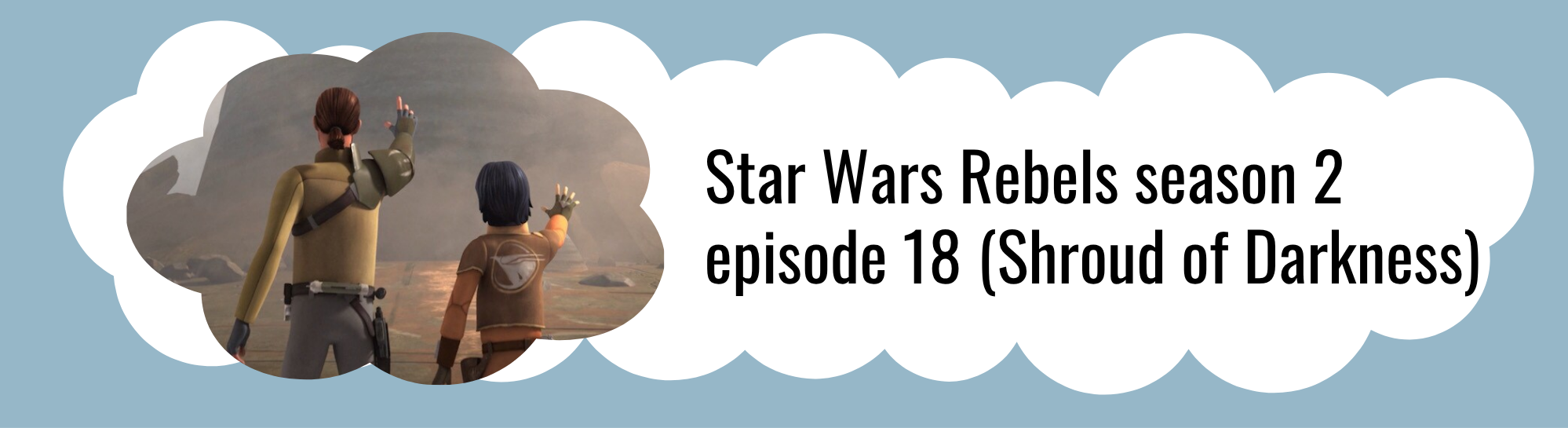
Kanan and Ezra are being hunted relentlessly by the Inquisitors, while being under the looming threat of Darth Vader.  Together with Ahsoka, they travel to the hidden Jedi temple on Lothal, seeking advice from Yoda.  While they are there, in true Jedi fashion, the temple itself tests them by confronting both Kanan and Ahsoka with their worst fears.

Meanwhile Ezra talks with Yoda once again.  He asks Yoda to tell him how to defeat Vader and his Inquisitors.  Yoda becomes somber and recounts to Ezra that the Jedi joined the Clone Wars in swiftness, so self-assured were they that this was the right decision.  And so, they were unaware as fear, anger and hate consumed them.  Ezra asks if it was wrong for the Jedi to fight, or for him to want to protect his friends?  Yoda admits that at least part of the reason why he fought for as long as he did, was because he was consumed by fear.

As a final question, Ezra asks Yoda how they are supposed to win if they don’t fight back.  “Win?” Yoda asks with some wry amusement, before he repeats the word much more somberly.  “How Jedi choose to win, the question is.”

Sometimes we can be so concerned with “being right” that we completely ignore how we go about it.  I know I am guilty of that, probably more than a few times on this podcast, even.

Karlissa has been endeavoring to introduce me to some new fantasy.  Suffice it to say that her success rate hasn’t been optimal.  And I have been guilty of being honest with my takes but not taking care with how I am honest.  This is where I am trying to grow.

Karlissa has theorized that I am very particular as to what I like and want in a good fantasy story, much like J.R.R. Tolkien, in fact.  However, while it is completely fair to say that the fantasy stories that Karlissa has been introducing me to are not my cup of tea, I need to learn how to say it best.

So there you have it, three lessons I have learned in a galaxy far far away.  And hopefully I will begin to apply them in a podcast a bit closer to you.  Thanks for reading, and may the fourth be with you, at least for today.

P.S.: Do you enjoy when we talk about things in pop culture, like Star Wars, Sonic the Hedgehog, and Spy x Family? Let us know in the comments – we really do appreciate your feedback.

May 04, 2026 /Karlissa Koop
star wars, themes, lessons from fantasy, growth, media musings, animation, Filoniverse, purpose, podcast
Thoughts on Fantasy
Comment

Sonic the Hedgehog on the Small Screen... Ranked

March 08, 2025 by Karlissa Koop in Fantastical Xenofiction

By Jason Koop

Everyone: in this, the month of March, the year of our Lord 2025, I am petitioning that this be henceforth known as “The Month of Sonic the Hedgehog”.  Why, you ask?  Simple, because everyone knows that a march is like walking really fast.  That’s as close as you can get to running without lifting your knees that high.

So, to celebrate this inaugural month of Sonic, let’s do something that is still very much “in” these days.  Ranking media.

But what to rank… the Sonic video games, where the hedgehog got his start?  Nah, I haven’t played every Sonic game. How about the comics?  I’ve certainly talked ad nauseum about those on the podcast.  Yeah… about that.  I’ve only really read the IDW comics, and have only seen parts of the Archie comic run. And the movies… well, the less I say about those the better.

Hmmm… the problem with making these click-bait-y type blogs is you either need to come in with a ton of knowledge or a lot of time to get caught up on what you don’t know.

For the sake of brevity, we will rank something from a relatively small selection size.  Sonic’s adventures on the small screen.  Heck, we can make it even smaller by reducing it to purely animated series.  That way I can eliminate the Knuckles mini-series.

#6.   The Adventures of Sonic the Hedgehog (1993)

Full disclaimer, I have only seen a couple episodes of this, and… I honestly feel that gives me a pretty good grasp on the series as a whole.  The theme song kind of summarizes what to expect.  Sonic and Tails run around, clash with the Dr. Robotnik and his minions, wacky hi-jinks ensue, with no real plot or character to make them stick.  Frankly, it has more in common with a Looney Tunes cartoon than anything particularly “Sonic”.  While certain characters from the show got limited exposure in the Archie comic run, there’s a reason why no one is really clamouring for references to this part of Sonic’s history.

#5.   Sonic Underground (1999)

Again, having only seen a couple episodes of this, this is another insanely wacky chapter in the Hedgehog’s existence.  Really, about the only thing it does is affirm the Hedgehog’s affinity to music.  Which, while neat in of itself, does little to make this one worth watching.  At least it pretends at having a plot/story arc for its protagonists.  That’s something.  And the title is a pun.

#4.   Sonic Boom (2014-17)

Part of an attempted re-boot for the franchise (which also included a few video games sharing the same title), this series presented both different designs for the characters and a much lighter tone.  While the characters are relatively flat, there are some fun episodes and truly humorous jokes.  Thankfully, the show is self-aware enough not to take itself seriously.  Overall though, it’s best described by its in-show fast-food franchise, a “Meh Burger”.

#3.   Sonic Prime (2022-24)

This series is… confusing to me.  On the one hand, it cuts out the wacky silliness that Sonic has been known to indulge in with his animated shows.  On the other hand, it replaces it with a multi-verse story that frankly feels too spread out.  While the multi-verse does give the audience interesting takes on certain characters (like Nine, Knuckles the Dread and Mangey Tails), we aren’t given any real reason to get attached to them and their conflict.

The Chaos Council – comprised of 5 different Eggmen – is pretty funny with its squabbles and Shadow does his best to keep things on point.  There are multiple cool action sequences, and the dialogue is pretty good too.  However, it’s all too… surface and would have been better off with less multi-verse hopping.

#2.   Sonic the Hedgehog (1993-94)

Also known as Sonic SatAM (because it typically played on Saturday mornings), this is the series that is arguably the most recognizable.  In a world where Robotnik has pretty much won, polluting most of the planet and robotizing many of its inhabitants, it’s up to Sonic, Tails and the Freedom Fighters to fight back.  It provided the groundwork for the initial 10 years of Sonic’s run in Archie comics; with several characters introduced in the show being main characters, like Princess Sally Acorn, Bunnie Rabbot, Antoine, Rotor, Nicole, and Robotnik’s lackey Snively.  There is a surprising amount of world-building that happens to separate it from just being “stop the evil Dr.’s most recent evil plan”.

#1.   Sonic X (2003-06)

This is by far the largest Sonic show, in terms of story and scope.  The cast is big, including Sonic, Tails, Amy, Knuckles, Cream, Shadow, Rouge, and a human character, Chris Thorndyke. In the first season, the episodes range from funny side-stories (like where they play a baseball game against Eggman and his robots for a Chaos emerald), to more serious fare (like dealing with the fact that Chris feels very much an after thought of his parents).

The second season is where the series truly shines, taking Sonic and his friends away from Earth, and placing them in their own planet where they are soon caught up in an intergalactic war with the Metarex.  Here the series really goes big with its spectacle and stakes, leading to some surprisingly dark turns for a kids show, which makes the victory feel all the more earned.

The theme song is a fun jam.  And finally, it proves my theory that the perfect Sonic show should be an anime.

#0.   Sonic x Shadow Generations: Dark Beginnings (2024)

Karlissa went over my head an insisted I include this, to which I respond with…  IT’S NOT FAIR!!!  I mean, c’mon!  The animation is gorgeous, the dialogue is fantastic, the action scenes are flat-out SICK, and it features a hauntingly beautiful song by Casey Lee Williams!  I know, it’s a prelude to Shadow’s portion of the video game, and non-Sonic fans might not get a whole lot of it, but for someone like me (or even Karlissa, who has received fandom by association with me) its only flaw is that it’s not a full-on show!  Please, SEGA!!!  Make a show like this!  P.S.  Watch it on YouTube if you don’t own the game.

March 08, 2025 /Karlissa Koop
Sonic the Hedgehog, ranking, shows, animation
Fantastical Xenofiction
Comment

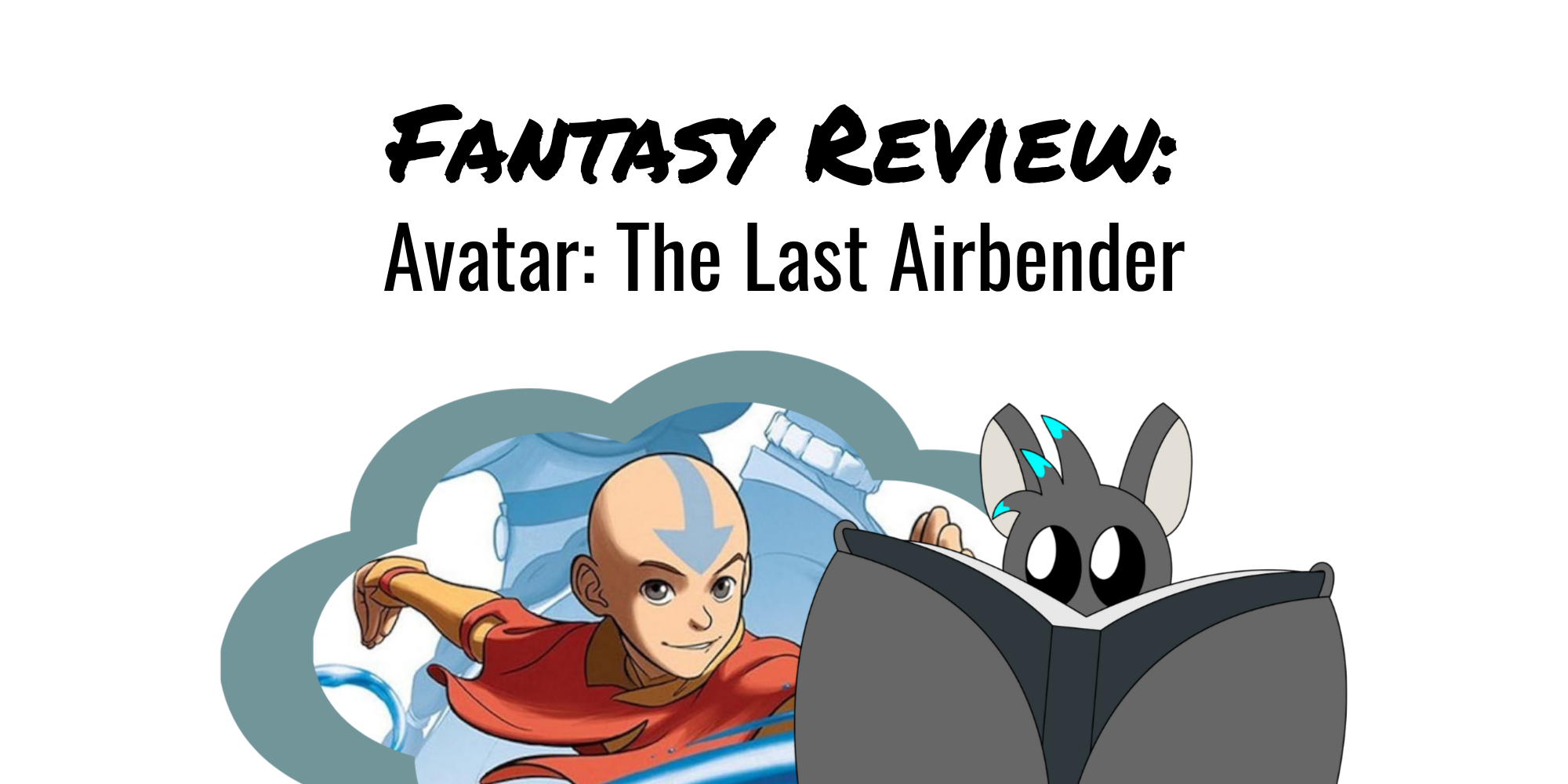
Fantasy Review: Avatar the Last Airbender

December 06, 2024 by Karlissa Koop in Fantasy Review, Thoughts on Fantasy

Written by: Jason Koop

Running from 2005-08 on Nickelodeon, Avatar: The Last Airbender is a series that needs little to no introduction to most.  And indeed, upon watching it for the first time this year (shout out to box DVD sets!), Karlissa and I can certainly see why.  The characters are funny and engaging on multiple levels.  The animation is quite simply gorgeous, colourful and expressive.  And the overarching story, while relatively simple, has its share of twists and turns that keep the audience engaged from the opening episode to the grand finale.

Following the adventures of Aang (the titular main character) and his friends – and some enemies – the world feels very much lived in.  Like there is much more going on than what is shown.  Its inhabitants have lives that, while they might not matter much to the show’s story, feel like more than just cardboard cutouts.

And while the overarching world stakes are high – Aang and his friends must stop the Fire nation from taking over the world – it doesn’t inherently lessen the more personal moments, moments of growth that occur during the show’s run. 

Unfortunately, the story can feel meandering at times, where the audience is left to wonder why we are being pulled into side stories/quests.  But, by and large even the side stories are a positive, as they serve as enhancers to the world as a whole.

The animation, while decidedly western, does borrow a lot from Japanese anime.  From character reactions to fight sequences to even its spirituality.  And while the last one might cause some to bristle at it, overall I feel like it enhances the show and differentiates it from a lot of western-made action-adventure series.  It’s not afraid to get super silly at times, or equally somber and reflective, and it manages to pull both off very well.

 Then there’s the action sequences.  Oh my.  This is where its anime influences really shine.  They are epic, martial art-infused sequences, that manage to feel both artistic and impactful.  And thankfully, they rarely seem to happen without being tied to something going on with a character during them, so they don’t seem gratuitous.

While neither Karlissa nor myself can say that this show is one of our favourites that we will be going out of our way to re-watch, both of us can safely say that it was a fun, engaging ride from start to finish and we are glad to have experienced it.

Rating:  3 out of 4 elements

December 06, 2024 /Karlissa Koop
fantasy, animation
Fantasy Review, Thoughts on Fantasy
Comment

Powered by Squarespace