Lessons from Star Wars: Picking Your Fantasy Battles Wisely
By Jason Koop
(You can listen to the podcast version of this post: Episode 56)
Those who have been following this blog for awhile may remember that my favourite Star Wars stories have come from the TV shows. Specifically the animated ones that Dave Filoni has worked on. They include The Clone Wars, Rebels, The Bad Batch and the recently released Maul: Shadow Lord.
One recurring theme from these shows is: do the ends justify the means?
Yoda references this in an episode (which I will talk about later in this post) where he says: “How Jedi choose to win, the question is.” And from that reflection I have learned lessons that I, hopefully, will apply to our podcast and blog. I’m going to go over three different Star Wars animated episodes, how they ask this question, and the lessons I have learned from them.
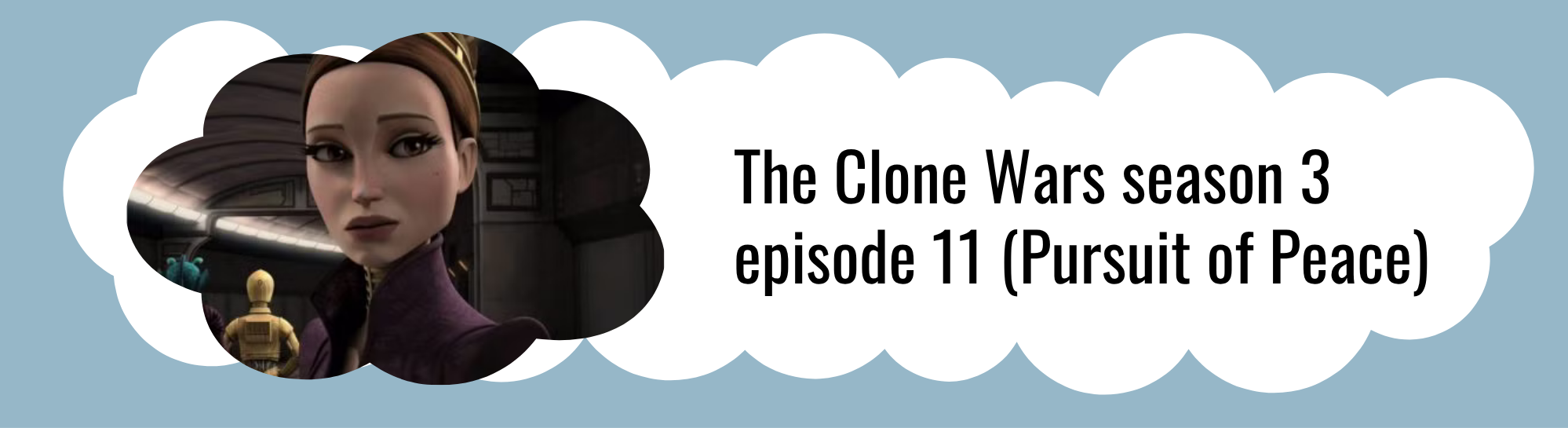
Political episode, with nary a lightsaber in sight. The Republic is firmly mired in a seemingly never-ending war with the Separatists, and the cost of the war is becoming more and more of a sticking point. In fact, the Republic is already being pushed to the brink of economic ruin with how much of its resources it is pouring into the war effort.
And yet, many in the Galactic Senate are willing to pass a bill that will in essence throw exorbitant amounts of money at the problem and create more clone troopers. While some, like Senators Padme Amidala and Bail Organa, are opposed to this approach, their protests are largely falling on deaf ears, as most in the Senate are focused simply on defeating the Separatists.
Discouraged, and wondering if fighting this bill is worth the struggle, Padme is encouraged and convicted by one or her aides, who reminds her that listening to her people and caring for them is why she was put into power. And so, she sits down, takes a moment and truly talks with her aide, asking her how her family is doing. How the war is affecting them. And in that conversation, the truth comes out.
While the Senate debates and votes on how much it can justify spending in an attempt to defeat the Separatist army, it is the lower, middle and working class that is paying the cost of the war. Power outages, lack of running water, schools being shut down, food becoming a scarcer commodity. Padme convinces the Senate that if they continue to recklessly pursue greater military force at the expense of their people and their living conditions, they will lose the war, and the Separatists won’t need to fire a single blaster.

When we started Book-Bat, it was born from countless conversations that Karlissa and I had had about fantasy stories: their importance, what lessons we have learned from them, and how they have shaped us. Looking back at a lot of our earlier episodes on the podcast, I noticed that I was – and still can be – very cynical and disparaging to a lot of fantasy and fantasy writers. I remember particularly singling out Wayne Thomas Batson and Bryan Davis and various books of theirs.
I do believe that it is important to be able to look at things critically; to admit that books I previously enjoyed either aren’t as good as I had once thought or are no longer my cup of tea. That being said, I got so caught up in the short-comings and failings of particularly “Christian” fantasy, that I allowed that to paint my view of fantasy as a whole. I forgot fantasy’s virtues, the lessons it has taught me, and just its general capacity for goodness.
While I may still get critical of some fantasy stories – especially those claiming to be espousing Christian morals – I think it is of greater importance to not mindlessly lash out. I need to remember why we started this podcast and for whom. If I want others to find the richness that I believe can be found in fantasy, I cannot just present them with everything that is wrong with it. And I need to be humble enough to admit when something doesn’t match my personal tastes. A story can be good and not to my personal liking simultaneously.
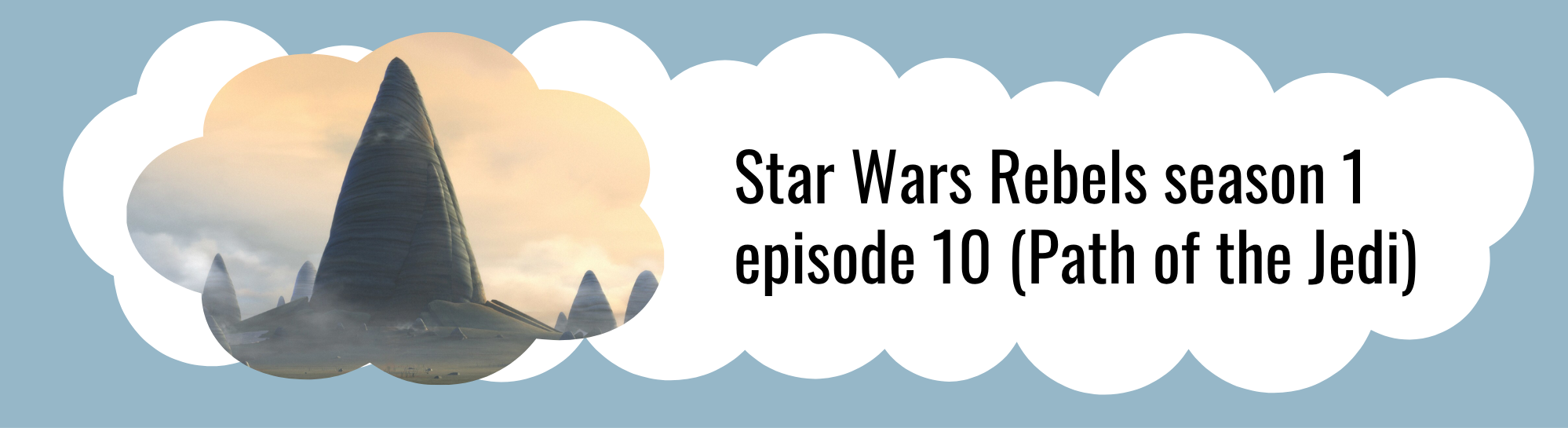
Jedi Kanan Jaarus is growing increasingly apprehensive of his decision to train promising street thief Ezra Bridger. Especially since Ezra recently used the dark side of the Force when he lashed out in anger at an Imperial attack. And so, he takes Ezra to a hidden Jedi Temple on Lothal.
Ezra is tested by visions, which reveal his innermost fears. Then he is contacted through the Force by Master Yoda. And, in true Yoda fashion, he gets Ezra to decide why he wants to become a Jedi. Is it for the power? So he can have revenge on the Empire?
Ezra says he wants to become a Jedi so he can help others, rather than continue in his old life of looking out for only himself. And he wants this because, when he sees Kanan and the rest of the crew of the Ghost helping others, it makes them feel truly alive. And it is that feeling of being truly alive, having a noble, selfless purpose, that Ezra truly wants.
Yoda’s last line is one that still sticks with me: “A Jedi, you might yet be.”

Why fantasy? In part because I believe that fantasy gets a bad rep from a lot of people. Particularly the conservative, Western-Evangelical culture I grew up with. I grew up being taught that as I got older and became a man, I had to leave fantasy behind, because it had no place in “real life”. To be mature is to give up all fantasy.
But is being a contrarian really a good reason to start discussions about fantasy?
There are other reasons, but if I had to try to pin down the real reason, it would be something like this: Fantasy gives us a window to explore things in their truest form.
Real life has a way of mixing and muddying things to the point that it can be hard to distinguish what all is in the soup. In fantasy we can explore things like love, sacrifice, self-worth, anger, shame, beauty, and heroism much deeper and with greater clarity. Themes can be built up in intentional complexity or boiled down to their simplest essence. And the lessons we learn through story and character have a way of sticking to our beings much longer than a long-winded theological discussion.
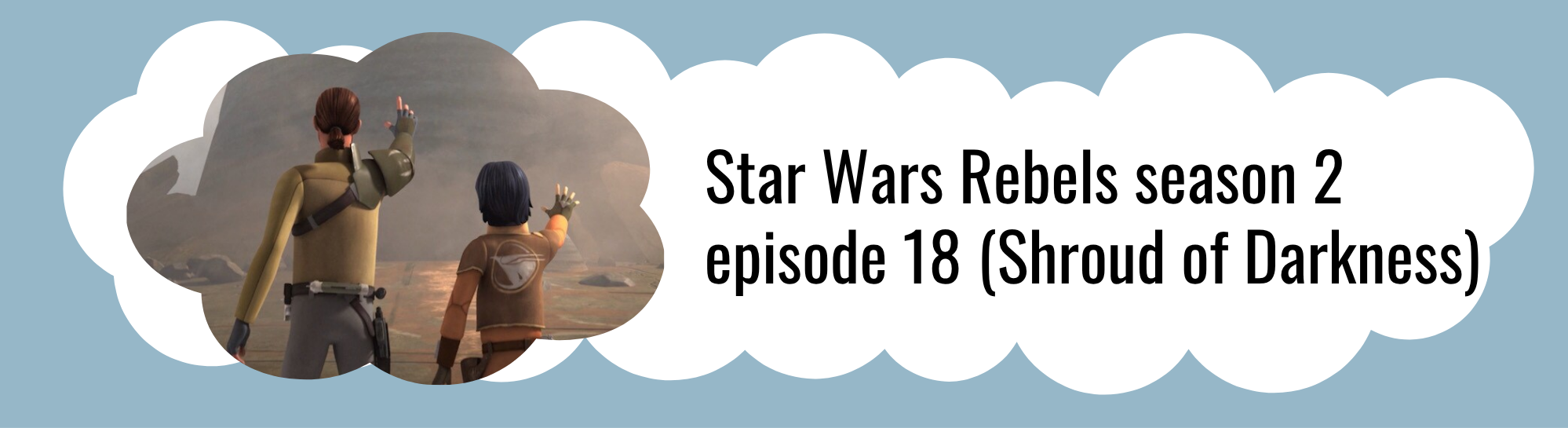
Kanan and Ezra are being hunted relentlessly by the Inquisitors, while being under the looming threat of Darth Vader. Together with Ahsoka, they travel to the hidden Jedi temple on Lothal, seeking advice from Yoda. While they are there, in true Jedi fashion, the temple itself tests them by confronting both Kanan and Ahsoka with their worst fears.
Meanwhile Ezra talks with Yoda once again. He asks Yoda to tell him how to defeat Vader and his Inquisitors. Yoda becomes somber and recounts to Ezra that the Jedi joined the Clone Wars in swiftness, so self-assured were they that this was the right decision. And so, they were unaware as fear, anger and hate consumed them. Ezra asks if it was wrong for the Jedi to fight, or for him to want to protect his friends? Yoda admits that at least part of the reason why he fought for as long as he did, was because he was consumed by fear.
As a final question, Ezra asks Yoda how they are supposed to win if they don’t fight back. “Win?” Yoda asks with some wry amusement, before he repeats the word much more somberly. “How Jedi choose to win, the question is.”

Sometimes we can be so concerned with “being right” that we completely ignore how we go about it. I know I am guilty of that, probably more than a few times on this podcast, even.
Karlissa has been endeavoring to introduce me to some new fantasy. Suffice it to say that her success rate hasn’t been optimal. And I have been guilty of being honest with my takes but not taking care with how I am honest. This is where I am trying to grow.
Karlissa has theorized that I am very particular as to what I like and want in a good fantasy story, much like J.R.R. Tolkien, in fact. However, while it is completely fair to say that the fantasy stories that Karlissa has been introducing me to are not my cup of tea, I need to learn how to say it best.

So there you have it, three lessons I have learned in a galaxy far far away. And hopefully I will begin to apply them in a podcast a bit closer to you. Thanks for reading, and may the fourth be with you, at least for today.
P.S.: Do you enjoy when we talk about things in pop culture, like Star Wars, Sonic the Hedgehog, and Spy x Family? Let us know in the comments – we really do appreciate your feedback.