Book-Bat

Book-Bat

Exploring the world of fantasy from a Christian perspective!

  • Home
  • About Us
  • books
    • all books
    • Nonfiction
    • Davy Jones' Aquarium
  • Podcast
  • Blog
  • More
    • Library and Search
    • Events
    • Christian Perspective
    • Connect

Video Game Review: Spirit of the North

September 03, 2026 by Karlissa Koop in Fantastical Xenofiction, Fantasy Review, Thoughts on Fantasy

By Jason Koop

Does story have a place in video games?  If so, what type of stories can/should be told?  How does the type of game affect the story?  And is there room for innovation and creativity in the wide world of video games?  I didn’t think so, until playing a game called Spirit of the North.

                To be clear, I didn’t start playing video games until I was about 8.  And when I did, my first experiences were almost exclusively made up of kart racers like Diddy Kong Racing, and CTR: Crash Team Racing.  Several years later, my horizons were expanded to include games like platformers like Crash Bandicoot 2: Cortex Strikes Back and adventure games like Spyro: Year of the Dragon.  Spoiler alert, neither of those games are known for deep story-telling.  Any stories tend to consist of straight forward, here’s the level’s goal, accomplish it to move closer to the game’s conclusion.

                Now, I am aware that the video game market has grown exponentially since I was a kid/teenager.  More and more games are being made by smaller, independent companies, which has led to a great diversification of the type of games being made available and the stories being told.  But there’s something to be said for personally experiencing a game.  And Spirit of the North is a title that has had a profound influence on me.

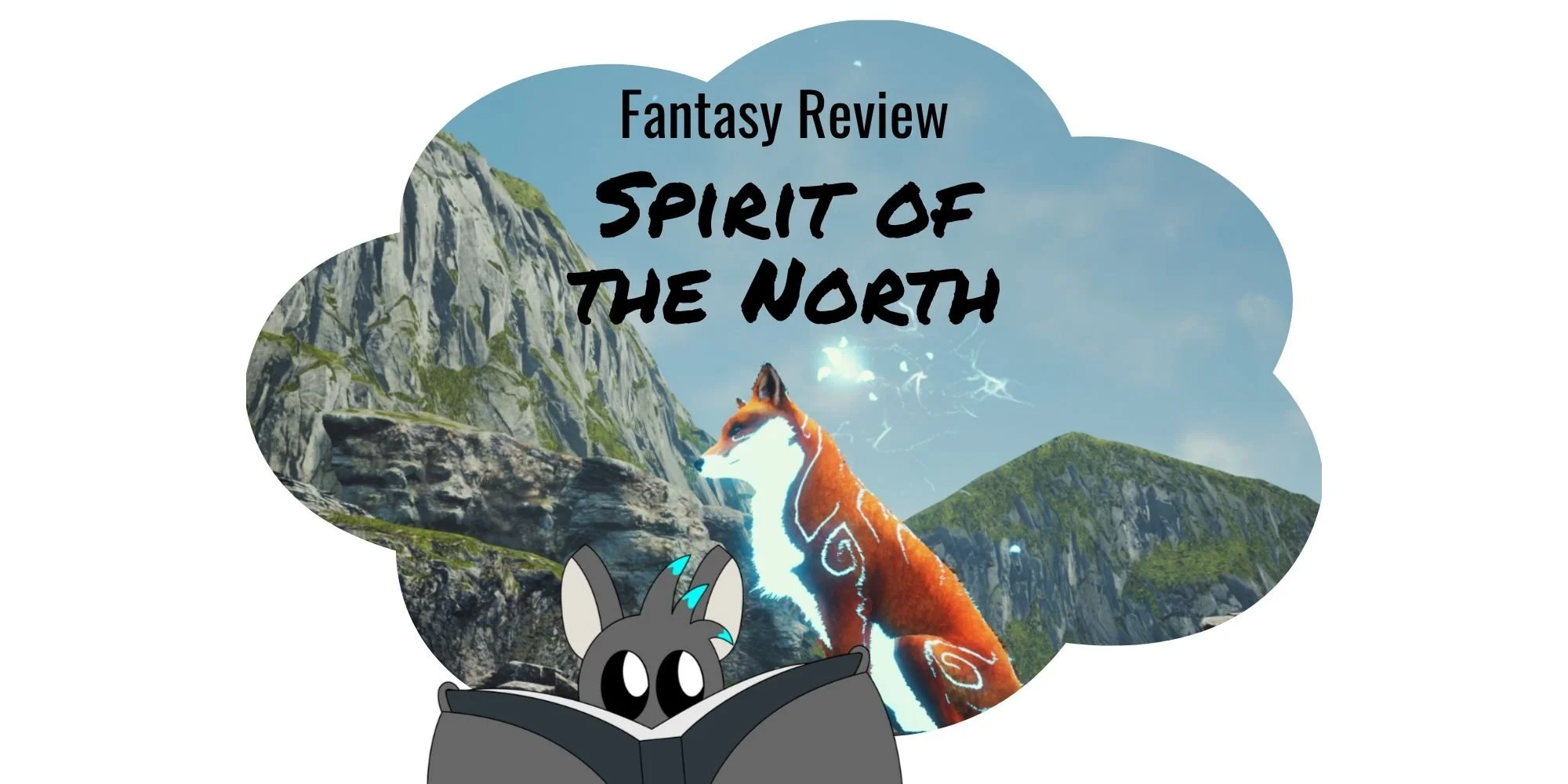
                Developed by Infuse Studio, Spirit of the North is a third-person adventure game where you control a fox that is wandering a land where you appear to be the lone living being left.  Early on, you collapse, seemingly dead, until you are revived and given spirit powers, which enable you to both traverse as well as combat this sickness that seems to have ravaged the land.

                Set in what appears to be a Northern European country – maybe Finland or Norway – you traverse from snowy mountains, grassy valleys and watery lagoons, all the while finding ruins of a lost civilization, wherein lies a story of great loss and tragedy as you aim to ultimately bring about the land’s healing.  Throughout the levels, you find a blue flower that grants you spirit abilities throughout the game – like being able to air-dash, send forward a spirit projection, and a spirit blast – in contrast with a red parasitic growth that seems to be responsible for the desolation that surrounds you.
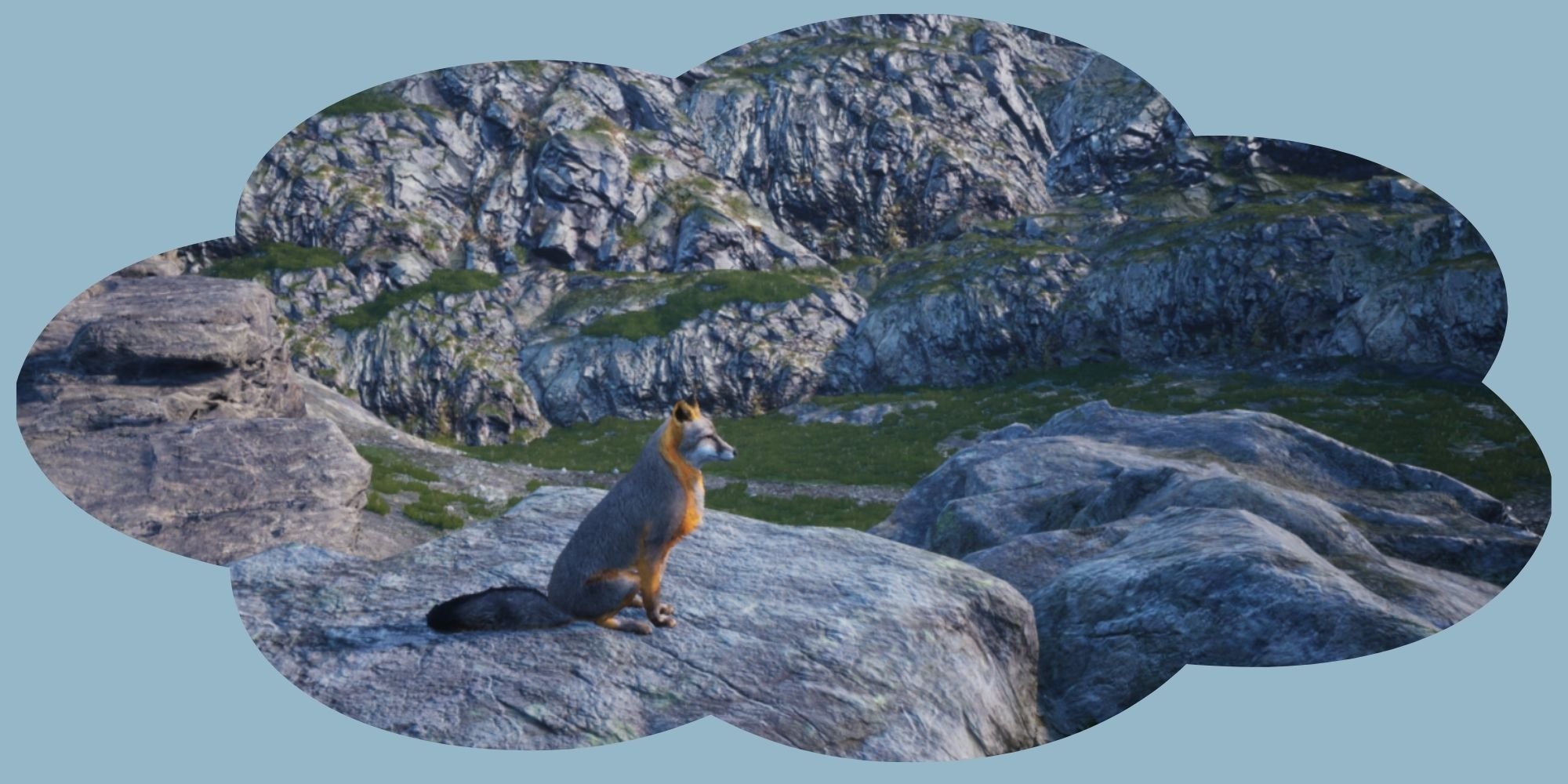
                This game is deceptively simple.  You control a fox, and you can run, jump, bark, and wag your tail – yes, those are the controls, and barking never ceases to be glorious – as you roam across scenery that is nothing short of gorgeous to look at.   The levels (called chapters) are pretty straight forward – for the most part – and reaching the end simply takes you into the next chapter.

The story is completely non-verbal, though.  There is absolutely no dialogue, nothing is written down for you to read.  The story is entirely told through visual art that you can find scattered throughout the levels.  Really, it is completely possible to finish the game without absorbing anything of the story and taking away that the game has some nice settings and a fantastic soundtrack.  But if you take the time, there is a poignant story to be found here, and I think the extra effort makes the game that much more worth it.  And it makes the ending – which is in of itself fantastic – all the more meaningful.

One takeaway I have from this game is that while I have always been slow to pick up on story cues and rhythms, there is something more rewarding, more enriching, when a story doesn’t just hand its audience everything.  Looking closer, actively paying attention to details, and just generally putting in the effort might be more taxing on me personally, but I can’t say that I don’t benefit from it.  If nothing else, being in the habit of not expecting things to be handed to me or quitting when I don’t readily understand things sounds like good life skills to hone and keep sharp.

I won’t spoil the game here, you will need to stay tuned to the Book-Bat podcast, where Karlissa and I will be sure to discuss this further.
September 03, 2026 /Karlissa Koop
video game, creativity in design, xenofiction, foxes, review, analysis, retrospection, Spirit of the North, silence, fantasy and nature, fantasy review, fantasy game, storytelling
Fantastical Xenofiction, Fantasy Review, Thoughts on Fantasy
Comment

Fantasy Review: Rewriting Adam by Connie Mae Inglis

October 02, 2025 by Karlissa Koop in Book Reviews

Review by Karlissa J

What distance would you travel to finally find a sense of home?

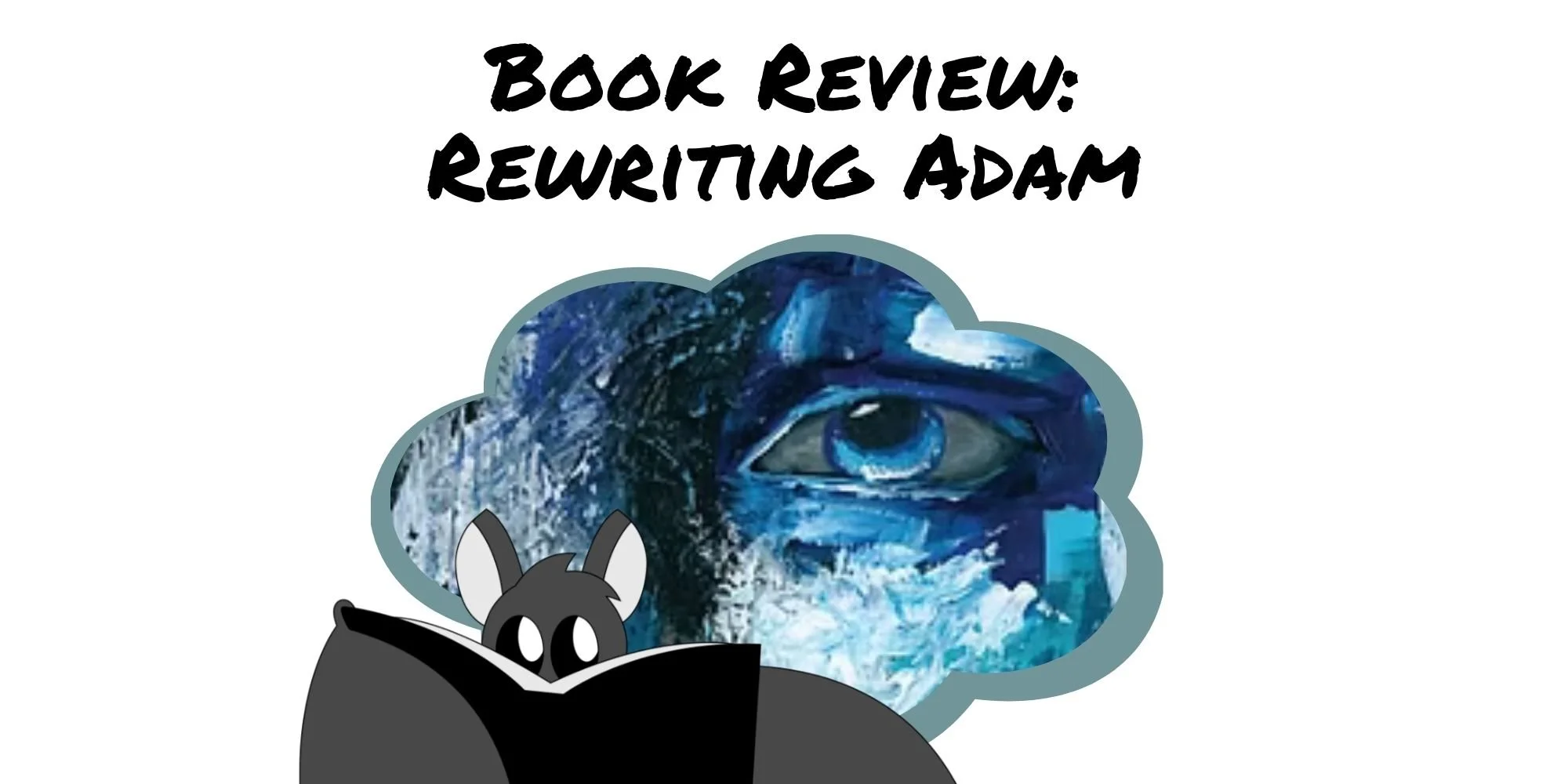
Rewriting Adam by Connie Mae Inglis is the story of a man named Ethan, and how his recent divorce sends him on a quest of soul-searching in Thailand. He doesn’t know how to begin or what to do with himself, but a providential encounter with Janus, and archaeologist, puts him on a path towards facing a ghost, rethinking his past, and setting foot in an alternate, Edenic realm.

From my first read, I was enamoured by the vivid depictions of Thailand and Myanmar. Before the Eden-realm comes into play, we follow Ethan – a Canadian – as he experiences these countries and their cultural differences. When Eden does come into the story, it holds surprises of its own. And there are layers to this novel that stand out the more I’ve read it.

Rewriting Adam generally does a good job of balancing elements of drama, horror, and enchantment. What I would say upon my third reading is that the drama can, in moments, feel overplayed; and the horror aspects could have been more intense and introduced earlier in the novel, considering the important role they play in Ethan’s journey. However, that may be more of my personal preference.

If you expect a fantasy novel to instantly throw you into another world and upon a hero’s quest, the fantastical elements will seem to be introduced too late in the novel. But if you are a lover of sci-fi and fantasy who enjoys stories with more unorthodox pacing, this is a narratively unique and spiritually thoughtful journey worth taking.

October 02, 2025 /Karlissa Koop
review, books, book review, Christian fantasy
Book Reviews
Comment
June 2020.png

June 2020

June 29, 2020 by Karlissa Koop in Sneak Peaks

2020 has been busy, with it’s share of ups and downs.

In terms of author events, I announced the winners of my first art contest and the results of my second art contest. I also posted my own art piece. And I announced and then had to cancel my book launch.

I posted my own reviews for Black Mists and Dwelling in Darkness, and my thoughts about how I wanted to handle the covid-19 crisis. I also shared some nature designs, and on my personal FaceBook page, I re-shared a blog post about ants from 2019.

In my April update, I said my goal for writing would be to finish Part One of my next book by mid-June. Though that didn’t happen, I have made great progress, and am on schedule to publish sometime next year. Good thing, since I’ve got a lot of fans looking forward to the conclusion to Tales of the Diversity!

In another recent post, I talked about the church library I run and how the pandemic restrictions have affected it. Well, our church just announced that the library is open again! (With the necessary restrictions, of course.) So I will be getting back to work there.

Why all this review? Basically, because I may not be posting much for blogs in the remainder of the year. The arrival of our next baby is ever approaching. And the pandemic restrictions mean I may wait until next year to do book signings.

However, I do still plan on doing a post about the video game I’m helping create. If you want to follow the game’s official blog, you can sign up for updates on the Soltorch website.

Thank you to all who continue to encourage me in my writing and other projects! It’s a blessing to hear how I’ve made a positive impact in your lives.

June 29, 2020 /Karlissa Koop
review, retrospection, future
Sneak Peaks
Comment
Review cover.png

"Christopher Robin" 2018 Movie Review

August 16, 2018 by Karlissa Koop in Book Reviews

I've heard a positive and a negative review of the new Disney movie, "Christopher Robin."

The thing is - and I suppose naturally so - these reviewers start by comparing this movie to previous incarnations (both book and film) of "Winnie the Pooh."

But when I recently watched "Christopher Robin," I didn't see a "Winnie the Pooh" movie. Well, yes, but no.

This is a movie about depression.

Yes. That's what I got from watching it.

First of all, if you plan to see the movie but haven't yet, I'd advise you watch it before reading this review. That way, you can experience the movie for yourself, and see it your own way, instead of seeing it the way I do.


The Stressers

Because of my own emotional struggles since having a child, I decided it'd be worth doing a little research on depression; specifically looking at advice on how to deal with it. The resources I've found discuss some common 'stressers' - life events that can bring on depression - and helpful ways of dealing with it.

And this movie, in many ways, 'reads' like a depression handbook.

We begin with the stressers. The movie flashes through a few scenes that take Chris away from his Hundred Acre Wood and into the 'real world.' And each corresponds to a major stresser.

He is sent off to boarding school (moving, major lifestyle change).

His father dies (loss of a loved one).

He goes off to war (traumatic event).

In addition, the future of the company he works for has been laid on his shoulder, and he is expected to come up with a way to save it from collapsing single-handedly (unrealistic work expectations). (Technically, his boss is supposed to be helping him, but doesn't.)

His wife expresses how she misses the old him and feels she and their daughter are being ignored (marital tension).

And he spends the vast majority of his time in an office building in a busy downtown area (I'll dive more into the nature-deprivation later).

I think one piece of 'evidence' about this being a movie about depression is a seemingly throwaway character who appears in only a few scenes: Christopher's neighbour. This neighbour constantly reminds Robin that he promised to play a game of cards with him sometime; but Chris continues to make excuses as to why it can't be today.

This character exists to showcase the fact that not only can Chris not find time for his family, he can't find time for friends either. His social interactions have been reduced to work-only. This is further shown in a scene where a coworker attempts to start a friendly conversation with him, and Chris ignores the attempt and immediately starts talking about work.

This anti-social lifestyle can only harm him emotionally in the long run.

Thankfully, the movie doesn't leave Christopher Robin there.


The Relief

After establishing the many depression-inducing aspects of Christopher Robin's life, the narrative forces him away from his hectic life - and in doing so, presents him with a few of the advised treatments for handling depression.

He plays. He relaxes. He spends time with old friends. He takes the risk and tells his boss' boss that he was expected to plan the company's new direction all on his own - when realistically, he and his boss should have been sharing the responsibility.

And he takes time to connect with nature.

As someone who also researches conservation and other environmental ethics, its the parts about nature that really stood out to me. Some experts believe that one of the major causes in the rise of depression is that most people now live in cities, disconnected from 'the great outdoors.'

There are so many beautiful nature moments in this movie. The scene that sticks in my memory is where the camera fixates on sunlight trickling through the branches of a tree. The scene exists just to be relaxing, nostalgic.

I mean, it is the Hundred Acre Woods. And woods are nature.

'Connect with nature' and 'go outdoors' may not necessarily be in the depression textbooks - yet - however, I've found it to be a commonly raised suggestion. And this movie presents spending time in nature as a special part of life.


The Conclusion

My husband pointed out that the end of the movie seemed to him like a very Disney, everything-works-out well happy ending - perhaps too much so. I mean, he solves his work problem in the end, and he didn't even need to spend more time on it!

But again, this is psychology in action. And I know that from advice I've received as a creative. His work problem was, in fact, a creative one. And some of the top advice for solving a creative problem: step away from it.

Read Todd Henry's "The Accidental Creative" Chapter 7 if you want to get deeper into this. I'll give you the basic summary: we don't draw creativity out of thin air or working harder. As much as we may like to think otherwise, tests have suggested its true: we put out what we put in. Life experiences, social interactions - these are the actual sources of our creativity.

So him being able to solve the problem only after he'd gone out and had a grand adventure is perfect: it's creativity advice in action.

This movie may be a "Winnie the Pooh" movie. However, in another sense, it's a movie about... well, us. Our society. Our stresses. Our worries. And though it takes place around World War II, it deals with some very modern concerns.

You can enjoy this as a simple, charming tale about fun characters. Or, if you want to think about it on a deeper level, it still stands as an interesting treatise on depression and ways of handling negative emotions.

August 16, 2018 /Karlissa Koop
review
Book Reviews
Comment

Powered by Squarespace