Book-Bat

Book-Bat

Exploring the world of fantasy from a Christian perspective!

  • Home
  • About Us
  • books
    • all books
    • Nonfiction
    • Davy Jones' Aquarium
  • Podcast
  • Blog
  • More
    • Library and Search
    • Events
    • Christian Perspective
    • Connect

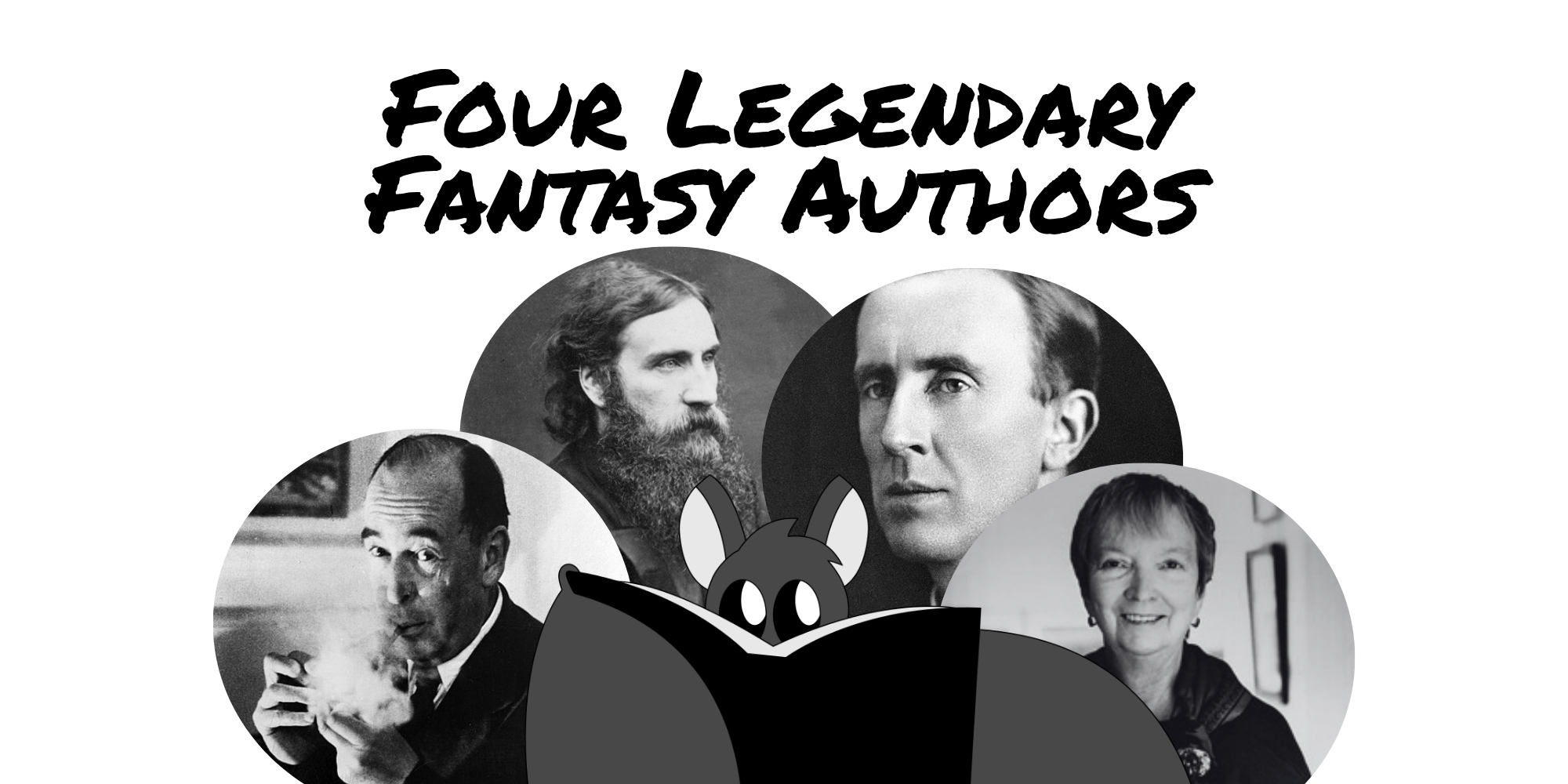
Four Legendary Fantasy Authors

June 04, 2026 by Karlissa Koop in Classic Novels & Authors

By Karlissa J.


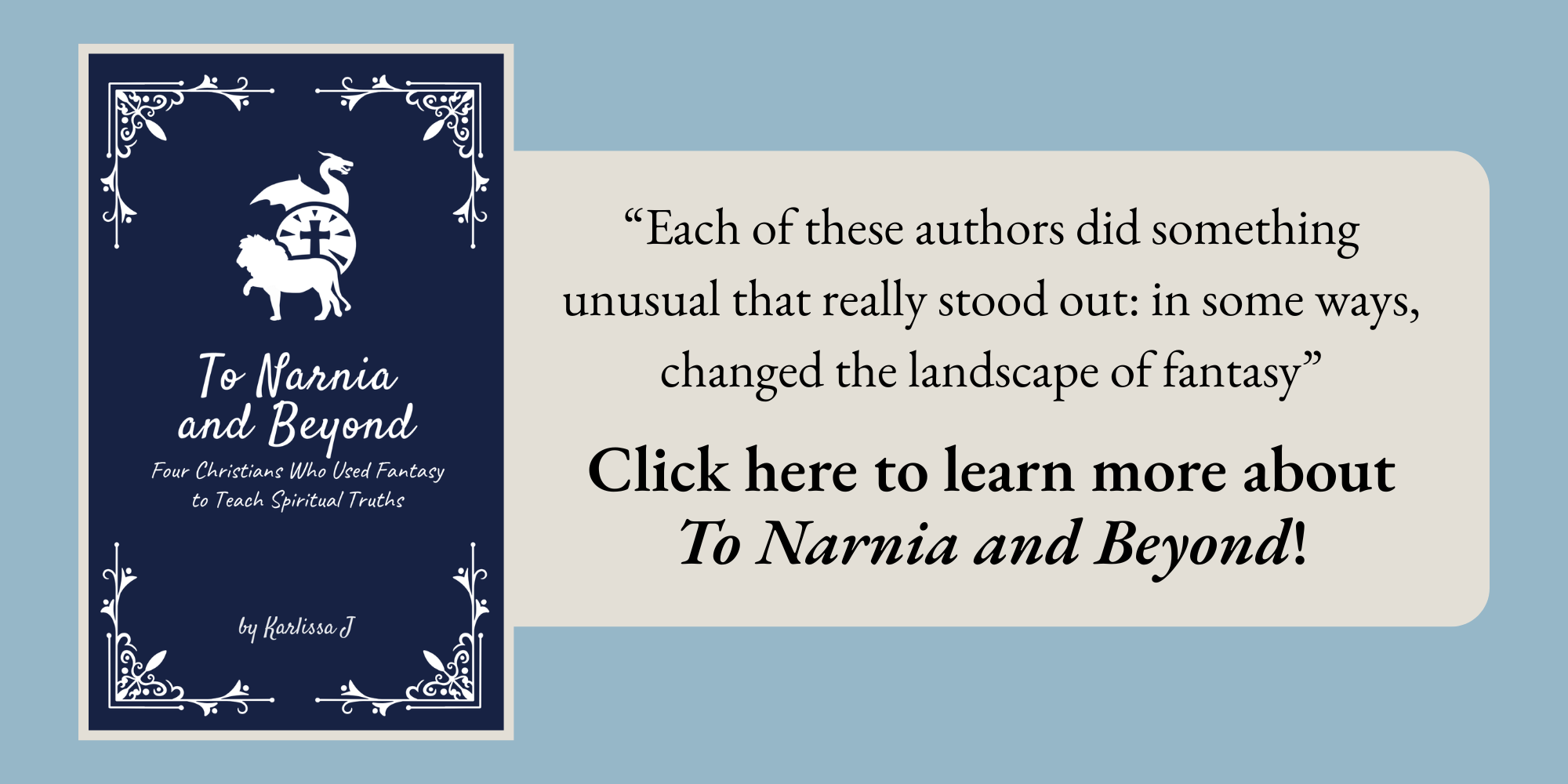
For my latest book, To Narnia and Beyond, I’ve been getting to know four incredible Christian authors who wrote fantasy. How many of these authors are you familiar with? How many of their books have you read? And what’s the most interesting thing you’ve learned about them? Let me know in the comments!

Most famous for writing The Lion, the Witch, and the Wardrobe, as well as the nonfiction work Mere Christianity.

Superfans admire him for his final novel, Till We Have Faces, as well as his Cosmic Trilogy (also called the Ransom Trilogy or Space Trilogy).

One of the most interesting things I learned about him…

He loved science fiction – a genre that seems just right for the way his mind worked. He naturally mulled over experimental concepts, some of them a little odd. Like playing with the idea of a universe where there are exactly seven genders…
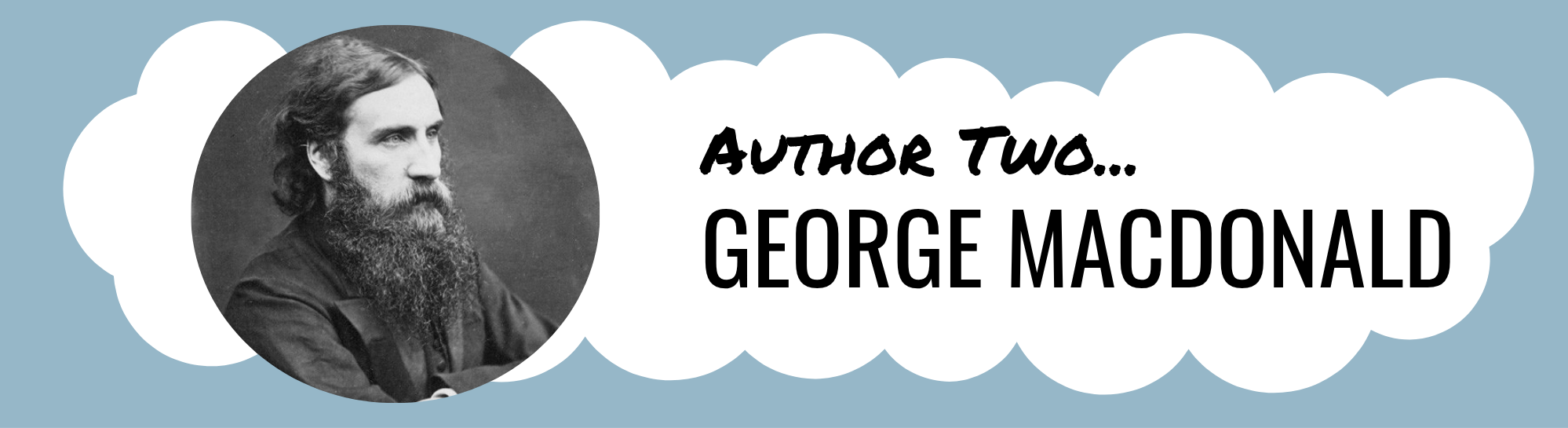
Most famous for writing The Princess and the Goblin.

Superfans admire him for Phantastes, a novel that C.S. Lewis considered life changing. They may also know his sermons, his fiction novels, his fairytales… MacDonald wrote a lot.

One of the most interesting things I learned about him…

MacDonald was a thoughtful and welcoming man with a big family. In addition to influencing the people who read his writings after he died (such as C.S. Lewis), he entertained multiple now-famous people at his house. A certain man named Charles Dodgeson read to MacDonald’s children an imaginative novel he was working on, and the family encouraged him to get it published. You may know Charles Dodgeson by his pen name, Lewis Carroll; and the book he read to MacDonald’s kids was Alice’s Adventures in Wonderland.
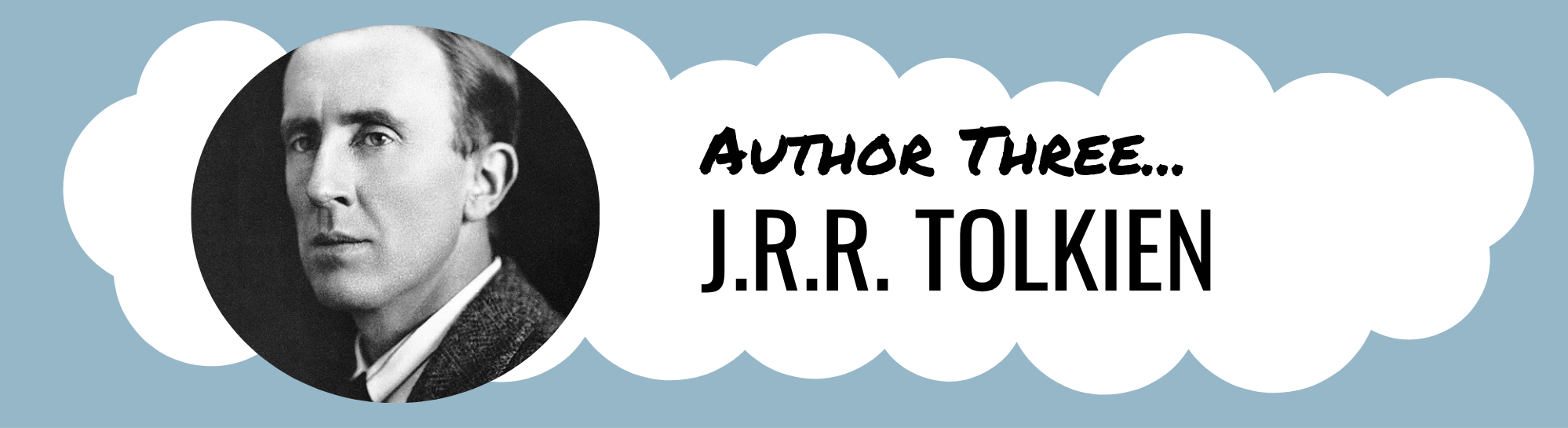
Most famous for writing The Lord of the Rings.

Superfans admire him for The Silmarillion – which was published after his death – and for his thoughtful essay “On Fairy Stories.”

One of the most interesting things I learned about him…

J.R.R. Tolkien studied linguistics. He put his knowledge of languages to use in various ways: helping write a dictionary, translating the Biblical book of Jonah… and, of course, inventing two Elvish languages for his novels.
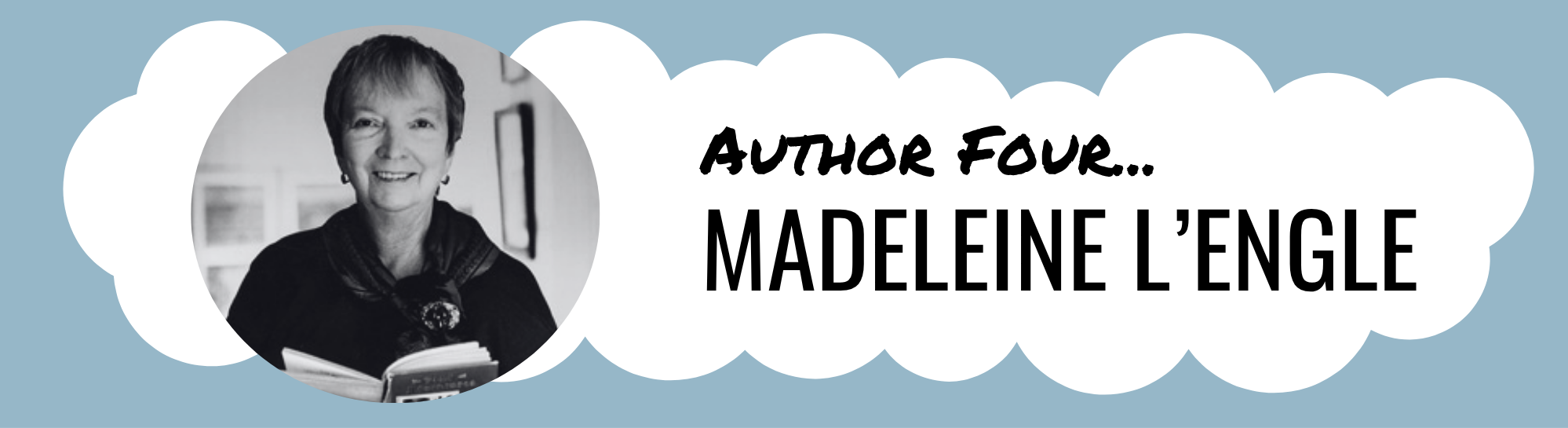
Most famous for writing A Wrinkle in Time.

Superfans admire her for her nonfiction book on art, Walking on Water, as well as the various novels that followed the protagonists of A Wrinkle in Time (for example, the Time Quartet, of which Wrinkle is the first book).

One of the most interesting things I learned about her…

Did you know it is possible to write a tale with an endearing, magical, eye-covered seraphim? Or that mammoths, shape-shifting angels, and teleporting unicorns could belong together in a retelling of Noah’s Ark? Madeleine L’Engle’s creativity is inspiring.
Subscribe to the Book-Bat newsletter!

* indicates required
/* real people should not fill this in and expect good things - do not remove this or risk form bot signups */

Intuit Mailchimp

June 04, 2026 /Karlissa Koop
fantasy history, classics, classic authors, CS Lewis, JRR Tolkien, To Narnia and Beyond, history, behind the scenes, Madeleine L'Engle, George MacDonald
Classic Novels & Authors
Comment

Behind-the-Scenes: Why I Included L'Engle in To Narnia and Beyond

February 04, 2026 by Karlissa Koop in Sneak Peaks, Classic Novels & Authors, Author Insights

By Karlissa J


At one point in my writing of To Narnia and Beyond, I was planning not to include Madeleine L’Engle.

I was still in the process of narrowing down which authors to focus on in my exploration of classic Christian fantasy. I’d decided that only deceased authors would count, as I wanted there to have been enough time to see how their legacy endured beyond them. Three authors were very obviously getting in: everyone knows of J.R.R. Tolkien and C.S. Lewis as pillars of fantasy; and George MacDonald had such a strong impact on Lewis (and on me) that there was no denying his inclusion as well.

But what about Madeleine L’Engle?

She is more recent than the other three: Lewis was the youngest of those men, and she was born on his 20th birthday. Her death occurred in 2007, not quite two decades ago. Her Time Quartet novels are odd, falling somewhere between fantasy and sci-fi. And I found that many readers I spoke to had never heard of her.

So why did I end up featuring her in my book To Narnia and Beyond?

For one, she didn’t stop coming up. It was important to me that each of the authors I included inspired Christians beyond their own generation. What I discovered in L’Engle was that she did just that. One of the people she inspired was painter Makoto Fujimura, whose books on faith and art I have greatly enjoyed. I realised that, even if fewer people have heard of her than Lewis or Tolkien, she has left a creative legacy that continues to inspire.

Second, I couldn’t deny anymore the way her writings had changed me.

Initially, I thought her books were strange. But I found myself contemplating life and my thoughts came to a story she’d told. What does it mean to love your enemy? What does it look like for each creature to submit to being what God called them to be? My children have asked me about baby unicorns, and I’m sure they come from eggs, because L’Engle’s A Swiftly Tilting Planet told me so.

Since I’ve written about her in my book, I have encountered more readers who know of Madeleine L’Engle and have enjoyed her writing. I expect that as I continue to talk to people about classic fantasy novels, I’ll continue to meet those who have been inspired by her.

 
February 04, 2026 /Karlissa Koop
Madeleine L'Engle, To Narnia and Beyond, classics, classic authors, Christian fantasy, faith, behind the scenes, hatching unicorns
Sneak Peaks, Classic Novels & Authors, Author Insights
Comment

Powered by Squarespace